Can a Newly Discovered Biology Mechanism Reverse Hearing Loss?
A new study identified a rare subset of inner ear cells with the hidden potential to transform into active hearing cells.


Permanent hearing loss affects hundreds of millions of people globally, typically resulting from damage to the sensory hair cells within the cochlea of the inner ear. These specialized cells are responsible for detecting sound waves and converting them into electrical signals for the brain to interpret. While non-mammalian vertebrates such as birds and fish can spontaneously regenerate hair cells after injury, mammals, including humans, lack this capability, making any such loss permanent. Current clinical solutions, such as hearing aids and cochlear implants, only compensate for the loss rather than repairing the underlying biological damage.
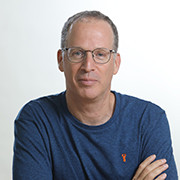
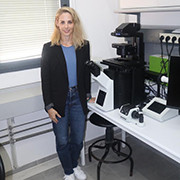
A new study published in Science Advances shows this limitation might not be absolute. The research was spearheaded by PhD student Lama Khalaily and Prof. Karen Avraham, Dean of the Faculty of Medical and Health Sciences, in close and essential collaboration with Prof. David Sprinzak and PhD student Shahar Kasirer from the School of Biochemistry, Neurobiology, and Biophysics, alongside Dr. Litao Tao of Creighton University (USA) and additional co-authors.
Revealing the Hidden Regenerative Capacity of tDCs
To investigate how cellular regeneration might be triggered, the interdisciplinary team combined advanced single-cell multi-omics sequencing with state-of-the-art live-tissue imaging techniques in Prof. Sprinzak’s laboratory.
Using these powerful approaches, the researchers identified an extremely rare subpopulation of supporting cells in the inner ear known as transdifferentiating Deiters’ cells (tDCs). The team discovered that these specific cells retain a unique genetic and epigenetic signature, maintaining a "hidden" plastic state that leaves them primed for transformation.
Crucially, the study demonstrated that inhibiting a key cellular communication pathway, the Notch signaling pathway (which Prof. Sprinzak's lab has extensively studied in the context of cellular pattern formation in the ear), can induce tDCs to change their fate. Upon inhibition, these rare supporting cells successfully transdifferentiated into newly formed, biologically active sensory hair cells.
A Major Leap Toward Restorative Therapies
The broader implication of this study is profound: it demonstrates that even in mammalian tissues long considered completely incapable of regeneration, a latent regenerative capacity exists. The primary challenge moving forward will be understanding how to expand and activate this newly discovered ability across a larger population of cells.
According to the research team, these findings lay a vital foundation for the future development of innovative biological treatments. Future therapeutic strategies may combine genetic and epigenetic interventions to bypass existing biological barriers, potentially restoring hearing rather than merely managing its loss.
The study was generously supported by a Breakthrough Research grant from the Israel Science Foundation (ISF), the Ernest and Bonnie Beutler Research Program of Excellence in Genomic Medicine, and the Sagol Center for Regenerative Medicine at Tel Aviv University.
Related Articles